NASA's Artemis 2: Humanity's Return to Deep Space After Five Decades
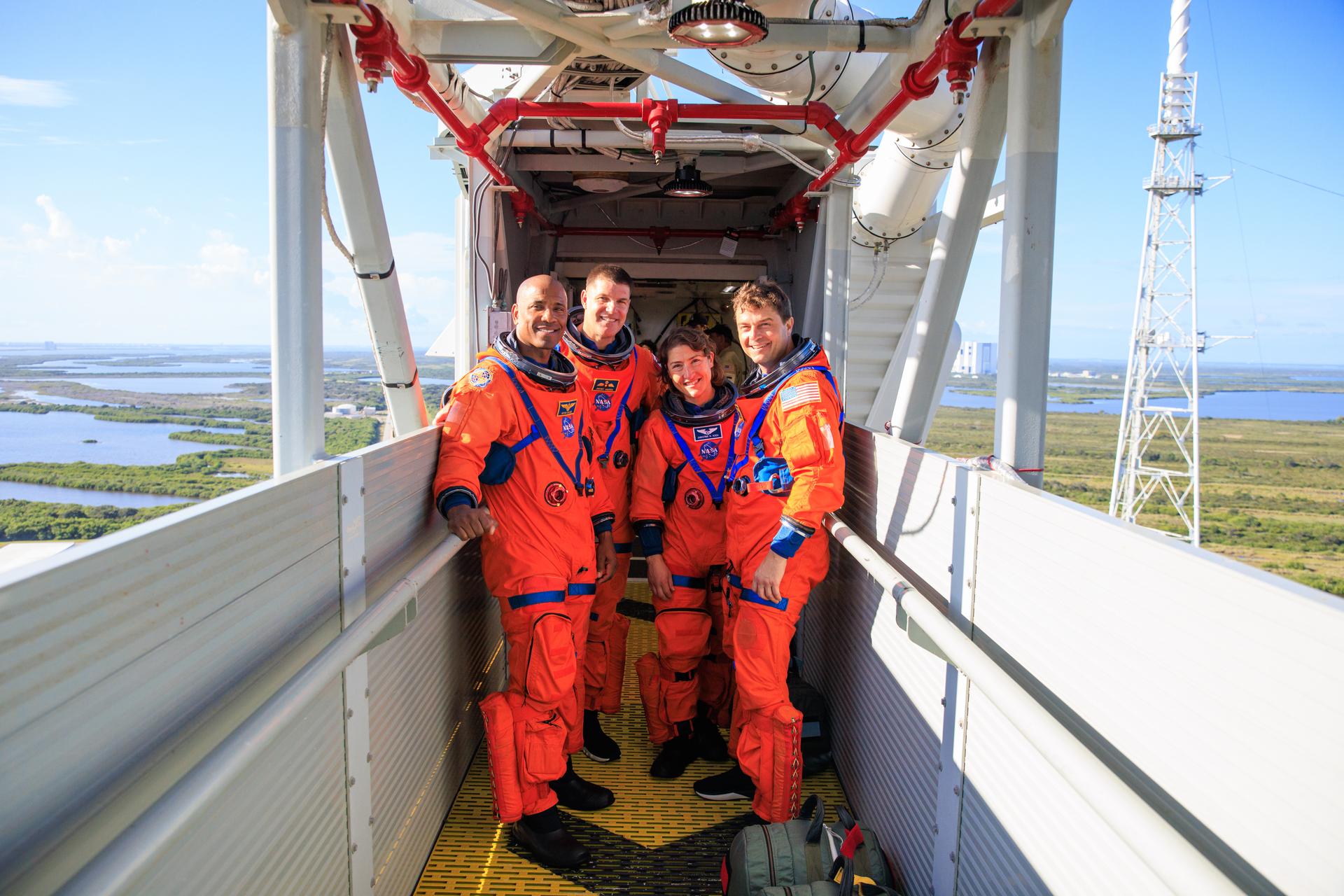
After more than 50 years since humans last ventured beyond Earth's orbit, NASA is preparing to make history once again. The Artemis 2 mission, targeting a launch in March 2026, will send four astronauts on a journey around the Moon—marking the first crewed deep space mission since Apollo 17 in 1972.
A Historic Crew for a Historic Mission
The 10-day mission will carry NASA astronauts Reid Wiseman, Victor Glover, and Christina Koch, along with Canadian Space Agency astronaut Jeremy Hansen. This crew represents several historic firsts: Victor Glover will become the first person of color to leave low Earth orbit, Christina Koch will be the first woman to travel to the Moon, and Jeremy Hansen will be the first non-American to make the journey.
Reid Wiseman, an experienced astronaut and test pilot, serves as mission commander. The diverse crew brings together expertise in spacewalks, robotics, long-duration spaceflight, and international collaboration—all essential elements for the ambitious Artemis program ahead.
The Journey: 10 Days Around the Moon
Artemis 2 will launch aboard NASA's Space Launch System rocket, carrying four astronauts inside the Orion spacecraft. The mission profile is designed to test every critical system needed for future lunar landings:
After launch from Kennedy Space Center's Launch Complex 39B in Florida, the Space Launch System will propel Orion into an elliptical Earth orbit. The crew will spend about a day in this orbit, testing the spacecraft's systems and performing manual flight operations—the first time astronauts will actually pilot the Orion capsule.
The journey to the Moon will take approximately four days. The vehicle and crew will swing around the Moon at a closest approach of around 4,700 miles above the lunar far side, taking them farther from Earth than any humans have traveled before. During the 45 minutes they're closest to the lunar surface, the crew will experience a complete loss of signal with Earth—a stark reminder of the isolation that comes with deep space exploration.
The return journey will also take about four days, culminating in a high-speed reentry through Earth's atmosphere at approximately 25,000 miles per hour before splashing down in the Pacific Ocean.
More Than Just a Moon Trip: A Critical Test Flight
While the destination is spectacular, Artemis 2 is fundamentally a test mission. Unlike later Artemis missions, Artemis 2 is not a lunar landing. Instead, it is a full-scale systems test of the Orion spacecraft with humans aboard on a deep space flight.
NASA will be validating several crucial systems:
Life Support Systems: The crew will test air, water, thermal control, and waste management systems during their 10-day journey beyond Earth's protective magnetosphere. These systems must function flawlessly in the harsh radiation environment of deep space.
The Heat Shield: Perhaps the most critical test involves Orion's heat shield, which must protect the crew during reentry as temperatures reach over 5,000 degrees Fahrenheit. NASA discovered unexpected wear patterns on the Artemis 1 heat shield, where chunks of ablative material became dislodged during reentry. Engineers have analyzed this issue extensively, and Artemis 2 will provide crucial data on the shield's performance with a crewed capsule.
Communications and Navigation: The mission will test deep space communication systems and manual piloting capabilities essential for future missions involving rendezvous with the Lunar Gateway space station and Human Landing Systems.
Radiation Monitoring: Beyond Earth's protective magnetic field, astronauts face increased radiation exposure. The mission includes experiments to measure and understand these effects on human health.
The Road to Launch: Overcoming Challenges
The path to Artemis 2 has not been without obstacles. NASA is now targeting March for the earliest possible launch of its historic Artemis II lunar moon mission, after encountering issues during a recent wet dress rehearsal—a crucial pre-launch test.
During the wet dress rehearsal in early February 2026, teams filled the Space Launch System with over 700,000 gallons of super-chilled propellant to simulate launch day procedures. However, hydrogen leaks developed during the test, similar to issues that plagued the Artemis 1 mission. Cold weather also caused problems with cameras and communications equipment.
NASA quietly updated its potential launch windows for its delayed moon mission. The agency is apparently now targeting March 6 to 11 as possible launch dates. The delay allows engineers to review data, address the technical issues, and conduct another rehearsal before committing to a launch date.
The rocket and Orion spacecraft remain at Launch Complex 39B while teams work to resolve these issues. If problems persist, NASA has the option to roll the entire stack back to the Vehicle Assembly Building for more extensive servicing.
Building the Foundation for Lunar Exploration
Artemis 2 represents the second major flight of the Artemis program, following the successful uncrewed Artemis 1 test flight in November 2022. That mission sent Orion on the same trajectory around the Moon without astronauts aboard, validating many of the systems that will protect the crew on Artemis 2.
The mission also carries five CubeSats from international partners including Germany, Argentina, and South Korea. These small satellites will conduct experiments on radiation shielding, electronic components in space conditions, and communications systems—all contributing to the global effort to return to the Moon sustainably.
Looking Ahead: The Path to the Lunar Surface
The crewed Artemis III lunar landing is expected to launch no earlier than mid-2027, the Artemis IV docking (with the Lunar Gateway) is planned for late 2028. If Artemis 2 succeeds, it will pave the way for these ambitious missions that will establish a permanent human presence on and around the Moon.
The ultimate goal is to land astronauts at the Moon's south pole region, an area never before explored by humans. Scientists believe this region contains water ice in permanently shadowed craters—a resource that could sustain long-term lunar bases and even provide fuel for missions to Mars.
After Artemis 6, NASA plans to conduct yearly lunar landings, transforming the Moon into a destination for sustained scientific research and exploration.
A New Chapter in Human Spaceflight
As the Artemis 2 crew prepares for their historic journey, they carry with them the hopes and dreams of a generation that has never witnessed humans venture beyond Earth's orbit. This mission represents not just a return to the Moon, but a bold step forward in humanity's journey to become a spacefaring civilization.
The challenges are significant—from technical hurdles with propulsion systems to the biological effects of deep space radiation. But if history has taught us anything, it's that humanity is at its best when reaching for seemingly impossible goals.
In the words of the Artemis program itself, this mission seeks "to explore for all and by all." As we stand on the threshold of this new era of exploration, Artemis 2 will prove whether we're ready to return to deep space—and whether we have the technology, the courage, and the determination to stay.
The countdown has begun. The world is watching. And soon, four explorers will venture farther from home than any humans in over half a century, lighting the path for all who will follow.
For the latest updates on the Artemis 2 mission and launch schedule, visit NASA.gov/artemis-ii
.jpeg)
.jpeg)
.jpeg)
Comments
Post a Comment