Google and the Quantum Revolution: Pioneering the Future of Computing
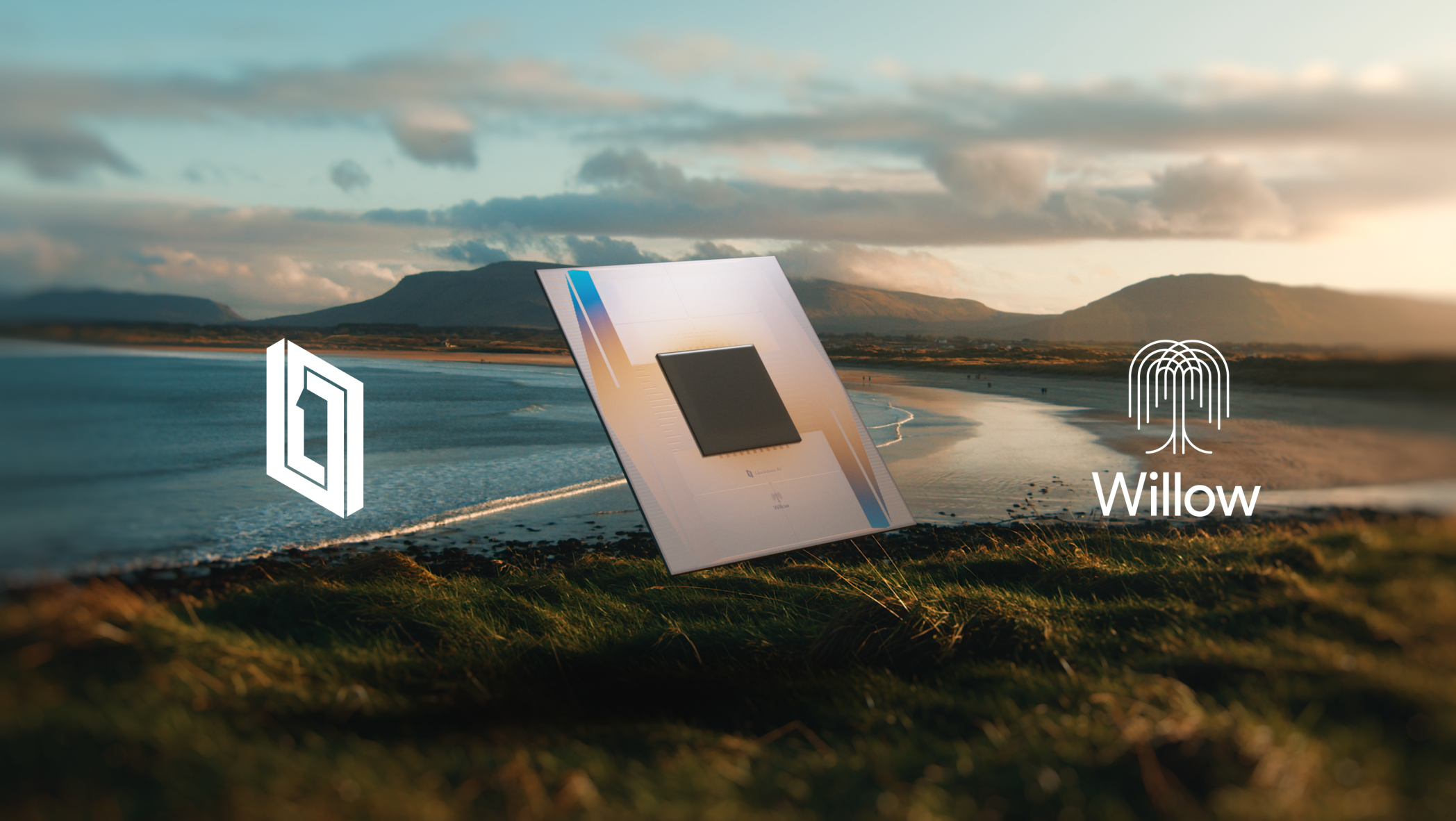
Quantum computing is often described as the next frontier in the evolution of technology. The idea of harnessing the weird and wonderful principles of quantum mechanics to solve complex problems in ways classical computers never could has excited scientists, researchers, and tech giants alike. One such giant, Google, has been at the forefront of this revolution, making significant strides in quantum research that could shape the future of computing.
In this blog, we'll explore Google's journey into quantum computing, the groundbreaking achievements they've made so far, and how their work is contributing to the quantum landscape.
What is Quantum Computing?
Before diving into Google's involvement, let’s recap what quantum computing is all about.
Traditional computers, the kind most of us use daily, process information in binary units called bits. Each bit is either a 0 or a 1, representing a specific piece of data. Quantum computers, on the other hand, use quantum bits, or qubits. Unlike classical bits, qubits can exist in multiple states simultaneously, thanks to quantum mechanics phenomena like superposition and entanglement.
- Superposition means that a qubit can represent both 0 and 1 at the same time, exponentially increasing the amount of data that can be processed.
- Entanglement allows qubits to be linked in such a way that the state of one qubit can influence the state of another, even over great distances. This phenomenon is what enables quantum computers to perform calculations in parallel, making them potentially much more powerful than classical machines for certain tasks.
Quantum computers could potentially tackle problems that are currently beyond the reach of even the most advanced supercomputers, ranging from drug discovery and climate modeling to cryptography and optimization.
Google's Quantum Leap: The Road to Quantum Supremacy
Google’s involvement in quantum computing is centered around their Quantum AI lab, where they have been working to develop a quantum computer capable of solving problems that are practically impossible for classical computers. Their ambitious goal is to achieve quantum supremacy, a term used to describe when a quantum computer can perform a specific task faster than the world’s most powerful classical supercomputer.
In October 2019, Google made history when it announced that it had achieved quantum supremacy with its quantum processor Sycamore. This momentous achievement marked a significant milestone in the field, demonstrating that quantum computing could indeed outperform classical computing for certain tasks.
1. The Sycamore Processor: A Historic Milestone
Google’s Sycamore processor, with its 54 qubits (one qubit was inactive during testing), completed a task in just 200 seconds that would have taken the most powerful supercomputers on the planet approximately 10,000 years to accomplish. The task was to sample the output of a random quantum circuit, something that might sound simple, but is actually a monumental challenge for classical computers.
The achievement was groundbreaking because it proved that quantum computers could perform specialized tasks faster than classical computers, although this was just a proof-of-concept rather than an immediately applicable real-world problem. Still, it was a massive step forward, and it solidified Google's position as a leader in quantum computing.
2. Quantum AI: Revolutionizing Artificial Intelligence
Beyond just quantum supremacy, Google is also exploring the intersection of quantum computing and artificial intelligence (AI). Quantum computing holds the potential to revolutionize AI by providing the ability to process vast amounts of data exponentially faster than current classical machines.
Google’s Quantum AI lab is investigating how quantum algorithms can accelerate machine learning and AI applications. The hope is that quantum computing will enable more powerful and accurate models for tasks such as image recognition, natural language processing, and optimization problems.
In particular, quantum-enhanced machine learning could lead to better optimization techniques, allowing AI models to make smarter decisions and predictions. For instance, Google has been working on developing quantum algorithms that can improve the way AI systems learn from data, making them more efficient and capable of handling increasingly complex datasets.
3. The Quantum Hardware Race: Building the Future of Quantum Processors
While Google has made significant strides in quantum algorithms and theoretical applications, one of the most challenging aspects of quantum computing is building the hardware itself. Quantum processors are incredibly sensitive to their environments, requiring extreme conditions like near absolute-zero temperatures to maintain quantum coherence.
Google has been at the forefront of developing such hardware. Sycamore, for instance, is based on superconducting qubits, which are made from circuits of superconducting materials that can carry electricity without resistance. These qubits are manipulated with microwave pulses, and the goal is to improve their fidelity (i.e., reduce error rates) and scalability so that quantum computers with thousands or millions of qubits can be built.
In 2021, Google unveiled a new quantum processor called Bristlecone, which is designed to scale up to more qubits and improve performance. The company is also working on quantum error correction techniques, which are essential for improving the reliability of quantum systems and enabling them to solve practical problems.
4. Google’s Quantum Partnership and Ecosystem
Google isn’t working in isolation. The company is part of a broader quantum ecosystem that includes academic institutions, government agencies, and other tech companies. Google has partnered with universities and research organizations like the University of California, Santa Barbara and NASA to accelerate the development of quantum computing.
Additionally, Google offers a quantum computing platform called Cirq, an open-source quantum programming framework. Cirq allows developers to create and run quantum algorithms on Google’s quantum processors. Google’s vision is to make quantum computing more accessible by developing software tools that allow developers and researchers to experiment with quantum systems, paving the way for future breakthroughs.
The Road Ahead: Challenges and Future Possibilities
While Google’s quantum achievements are remarkable, it’s important to note that the field is still in its early stages. There are several significant challenges ahead:
-
Quantum Error Correction: Quantum computers are extremely sensitive to environmental noise and require highly advanced error correction techniques to function reliably. Researchers are working to develop methods to correct these errors without significantly slowing down computations.
-
Scalability: Building large-scale quantum computers with thousands or millions of qubits is a complex task. Google’s quantum processors, such as Sycamore and Bristlecone, are still relatively small compared to what’s needed for practical, large-scale applications.
-
Practical Applications: While Google’s quantum supremacy experiment was a monumental achievement, there is still much work to be done before quantum computers can be used to solve real-world problems like drug discovery, climate modeling, or AI optimization.
However, the progress being made at Google, along with the contributions from other quantum research labs around the world, suggests that quantum computing could soon begin to make an impact in various industries. Google’s vision of a future powered by quantum computing is within reach, and as the technology matures, we can expect it to open up new frontiers in science, engineering, and technology.
Conclusion
Google’s work in quantum computing represents the cutting edge of technology and innovation. From achieving quantum supremacy with Sycamore to exploring new frontiers in AI and quantum hardware, the company is playing a crucial role in advancing the quantum revolution. While there are still significant hurdles to overcome, the progress made so far is inspiring and indicates that quantum computers will eventually transform industries and society.
As we look to the future, Google’s involvement in quantum computing will likely shape the direction of research, development, and applications, paving the way for a new era of computing. The quantum age is coming—thanks to the pioneers at Google and beyond, we are one step closer to unlocking its full potential.
If you're excited about the potential of quantum computing and want to keep up with the latest news and advancements in this field, make sure to follow Google’s Quantum AI lab and stay tuned for future breakthroughs!
.jpeg)
.jpeg)
.jpeg)
Comments
Post a Comment