Unraveling the Mystery of Dark Matter: The Invisible Backbone of the Universe
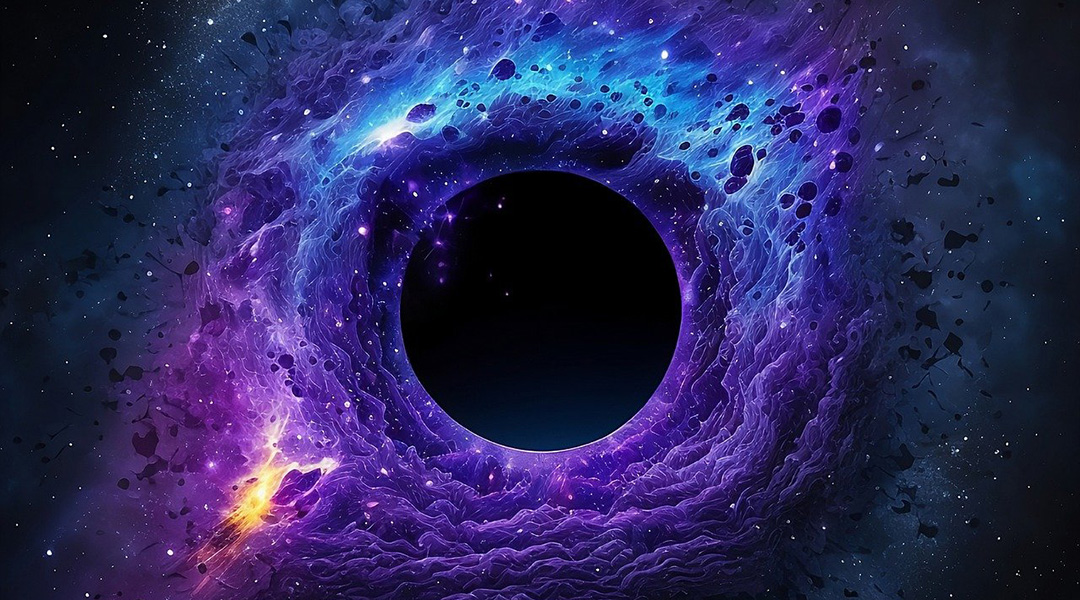
The universe is a vast and enigmatic place, filled with wonders that challenge our understanding of physics and cosmology. One of the greatest mysteries of modern science is the elusive substance known as dark matter. Though it cannot be seen or directly detected, scientists believe it makes up about 27% of the universe. But what exactly is dark matter, and why is it so crucial to our understanding of the cosmos?
What Is Dark Matter?
Dark matter is a form of matter that does not emit, absorb, or reflect any electromagnetic radiation, making it completely invisible to traditional telescopes. Its presence, however, is inferred from its gravitational effects on visible matter, radiation, and the large-scale structure of the universe. Without dark matter, the movements of galaxies and galaxy clusters cannot be adequately explained.
The Evidence for Dark Matter
The concept of dark matter was first proposed in the 1930s by Swiss astronomer Fritz Zwicky. While studying the Coma Cluster, he noticed that the galaxies were moving too fast to be held together by visible matter alone. This suggested the existence of unseen mass providing additional gravitational pull.
Further evidence came from studies of galaxy rotation curves. In the 1970s, astronomer Vera Rubin discovered that stars in galaxies were orbiting at nearly constant speeds, even at the outer edges where visible matter should not provide enough gravitational force. This pointed to an invisible mass influencing their motion—dark matter.
Additional support for dark matter comes from gravitational lensing, where light from distant objects is bent due to the gravitational pull of unseen mass, and from cosmic microwave background radiation, which reveals fluctuations in the early universe that align with the presence of dark matter.
What Could Dark Matter Be?
Despite decades of research, the exact nature of dark matter remains unknown. Some of the leading candidates include:
- Weakly Interacting Massive Particles (WIMPs): Hypothetical particles that interact only through gravity and the weak nuclear force, making them difficult to detect.
- Axions: Extremely light particles that may have unique electromagnetic properties.
- Massive Compact Halo Objects (MACHOs): Objects like black holes, neutron stars, and rogue planets that do not emit much light but contribute to gravitational effects.
- Modified Gravity Theories: Some scientists suggest that our understanding of gravity itself might need revision to account for the observed phenomena.
Searching for Dark Matter
Scientists are using various methods to detect dark matter. Particle colliders like the Large Hadron Collider (LHC) attempt to create conditions where dark matter might appear. Underground detectors, such as those at the Gran Sasso Laboratory in Italy, search for rare interactions between dark matter and normal matter. Astronomers also look for indirect signals, such as gamma-ray emissions, that might hint at dark matter interactions.
Why Is Dark Matter Important?
Dark matter plays a crucial role in shaping galaxies and galaxy clusters, acting as a cosmic glue that holds them together. Without it, galaxies as we know them would not have formed, and the universe would look vastly different. Understanding dark matter is key to unlocking the deeper laws of physics and the evolution of the cosmos.
The Future of Dark Matter Research
While dark matter remains one of the biggest unsolved mysteries in science, new technologies and experiments bring us closer to uncovering its secrets. Upcoming observatories, such as the Vera C. Rubin Observatory, and next-generation particle physics experiments may provide groundbreaking insights in the coming years.
The hunt for dark matter is not just about solving a cosmic puzzle—it is about expanding our knowledge of the universe and our place within it. Whether dark matter turns out to be a new type of particle or a radical revision of our understanding of physics, its discovery will be a monumental achievement in science.
As we continue to explore the unknown, one thing is certain: the cosmos still has many secrets waiting to be uncovered.
.jpeg)

.jpeg)
Awesome
ReplyDeleteNicely written.
ReplyDeleteInteresting